Welcome to the Winter 2026 edition of The Despatch, the Military Communications and Electronics Museum Newsletter
Message from Officer Commanding, Military Communications & Electronics Museum
As 2026 begins, I would like to take a moment to celebrate the exceptionally active and meaningful year 2025 has been for the Communications and Electronics (C&E) Museum, and to thank each of you for your continued support, dedication, and collaboration.
Throughout the past year, the Museum played a visible and engaged role in remembrance, education, and community connection. I was proud to see the Museum support and participate in national, Branch, and community events, including the Highway of Heroes, March of the Museums, C&E Week, Veterans’ Week, Super Jimmy Day, Discovery Expo, Op Jimmy Santa, and numerous CFSCE graduation ceremonies, to name just a few. These activities reinforced the Museum’s role as a focal point for Branch identity, commemoration, and CAF community life.
Veterans’ engagement remained central to our work in 2025. Our Monthly Veterans’ Coffee meetings continued to provide a trusted and welcoming space for connection, including a visit from the Veterans Ombudsman. We were also pleased to support Royal Canadian Legion initiatives such as Hiking Boots for Veterans and our Veterans Artistic Initiative, while broadening awareness of Homes for Heroes alongside a range of commemorative and outreach activities. The Museum further hosted Lunch-and-Learn sessions, public talks, and special events such as the RCR book signing, ensuring that lived experience and operational history remained at the heart of what we do.
Education, storytelling, and public outreach expanded significantly this year. We delivered numerous educational programs, hosted monthly historical and heritage observances—including Black History Month, Asian Heritage Month, Sikh Heritage Month, and others—and supported film and cultural programming, including the screening of You Are Here: A Come From Away Story. A major highlight was the ribbon cutting and opening of the Mission Afghanistan 2D Exhibit. We also broadened our reach through podcast interviews, YourTV spotlights, and press and media releases that showcased Museum events and initiatives.
Behind the scenes, 2025 was a year of substantial institutional and curatorial progress. We held a strategic planning meeting, developed a comprehensive Museum Roadmap, and completed foundational governance and constitutional documents. Regular Museum Committee and Senate meetings ensured appropriate oversight and alignment. Significant curatorial and archival work advanced collections stewardship, supported by digitization documentation, stock-taking and SLOC confirmations, improved environmental monitoring, and ongoing RP Ops work order submissions to protect both people and artifacts.
We also made meaningful progress on infrastructure, exhibits, and future-focused initiatives. Work began on the RMC display, the Op REASSURANCE / Latvia display initiative, and several museum expansion projects. We proposed the Museum Window Gallery initiative to increase P070 funds, initiated a project to revamp the large conference room’s audio-visual capabilities, and supported a high volume of conference room bookings in support of Base and Branch activities. In addition, we engaged with the University of Calgary to view an architectural study presentation and participated in a potential cruise ship working group, exploring new opportunities for outreach and visibility.
To strengthen the Museum’s long-term sustainability and professionalism, we pursued multiple grant submissions, developed various sponsorship agreements, and created a comprehensive Volunteer Handbook. We worked to improve fiscal responsibility by initiating the potential addition of two new positions—one for the Mercury Shop and one for Advertising and Marketing—and ensured staff first aid training was completed. We also advanced key agreements, including work on a Memorandum of Understanding (MOU) for INT Branch space and accreditation, while developing and submitting our Museum Development Fund (MDF) proposal. This work lays critical groundwork for digital modernization, improved collections management, and renewed interpretive approaches.
As we look ahead to 2026, I am confident that the Museum is well positioned to move from planning to delivery on many initiatives already underway. Our focus will be on implementing MDF priorities, advancing digital access to our collections, progressing exhibit renewal, expanding educational outreach, and continuing to professionalize Museum hours of operation. I also look forward to deepening partnerships across the CAF, with Veterans’ organizations, academic institutions, and the broader museum and heritage community.
Although this reflects only a portion of what we accomplished this past year—and I may have inadvertently missed a few items or events—I want you to know that none of this would have been possible without the dedication and commitment of our staff, volunteers, partners, and supporters like you. Your efforts ensure that the legacy of the Communications and Electronics Branch is preserved, honoured, and shared with integrity and purpose.
I look forward to continuing this important work together in 2026.
v/r,
Maj Scott Oikle
Officer Commanding, Military Communications & Electronics Museum
Canadian Armed Forces
Museum News and Events
The museum is still on winter hours Monday to Friday 1000-1530.
Coffee with Veterans started again in January. Please see the attached poster.
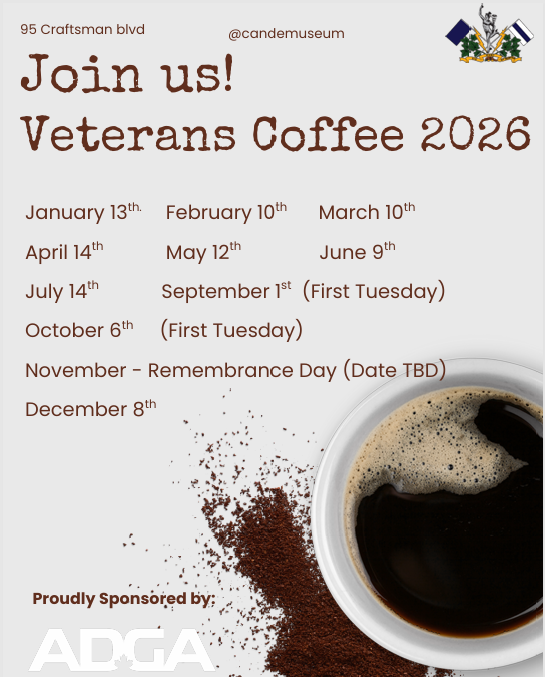
In conjunction with the Defence Women's Advisory Organization, we will be participating in International Women's Day. Please check our website for further details. March of the Museums will be at the Museum again March 16-20.
https://www.kingstonmuseums.ca/march-museums
What is March of the Museums?
16-20 March 2026
March of the Museums is free festival of museums where you and the family can have an unforgettable adventure by exploring history and heritage through imagination, crafts and play!
Taking place during the week of March Break, join us in Kingston and the surrounding area for a week filled with hands-on learning, imaginative play, and the chance to explore incredible museums, art galleries, and historic sites.
March of the Museums is an experience you won’t want to miss!
This year you can visit participating sites in Kingston, Bath, Napanee, Gananoque, Brockville and Almonte! Check back soon for the full schedule.
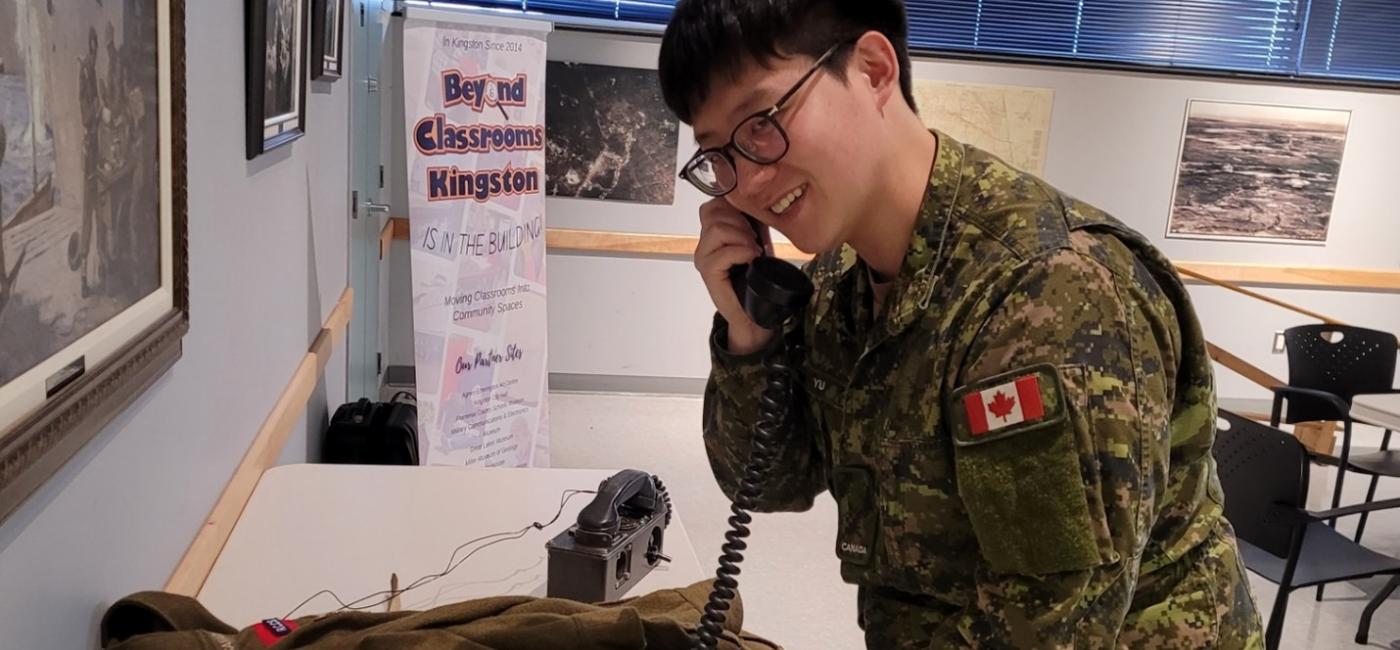
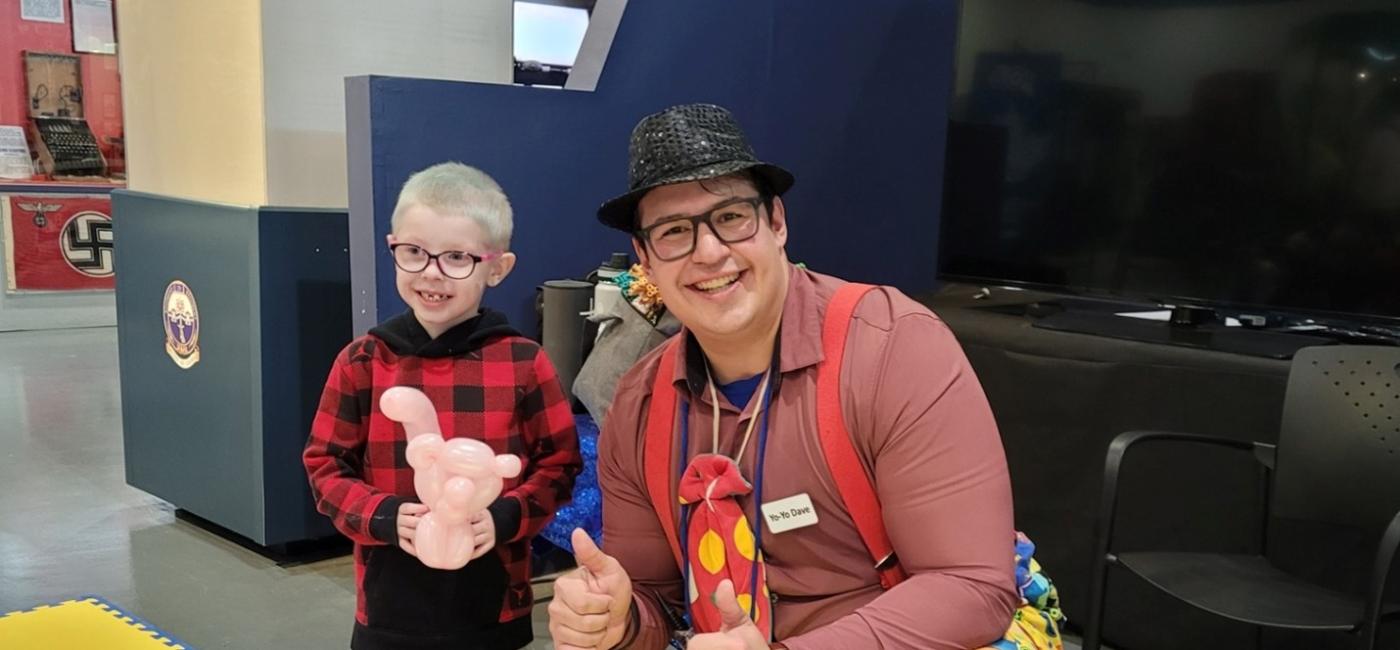
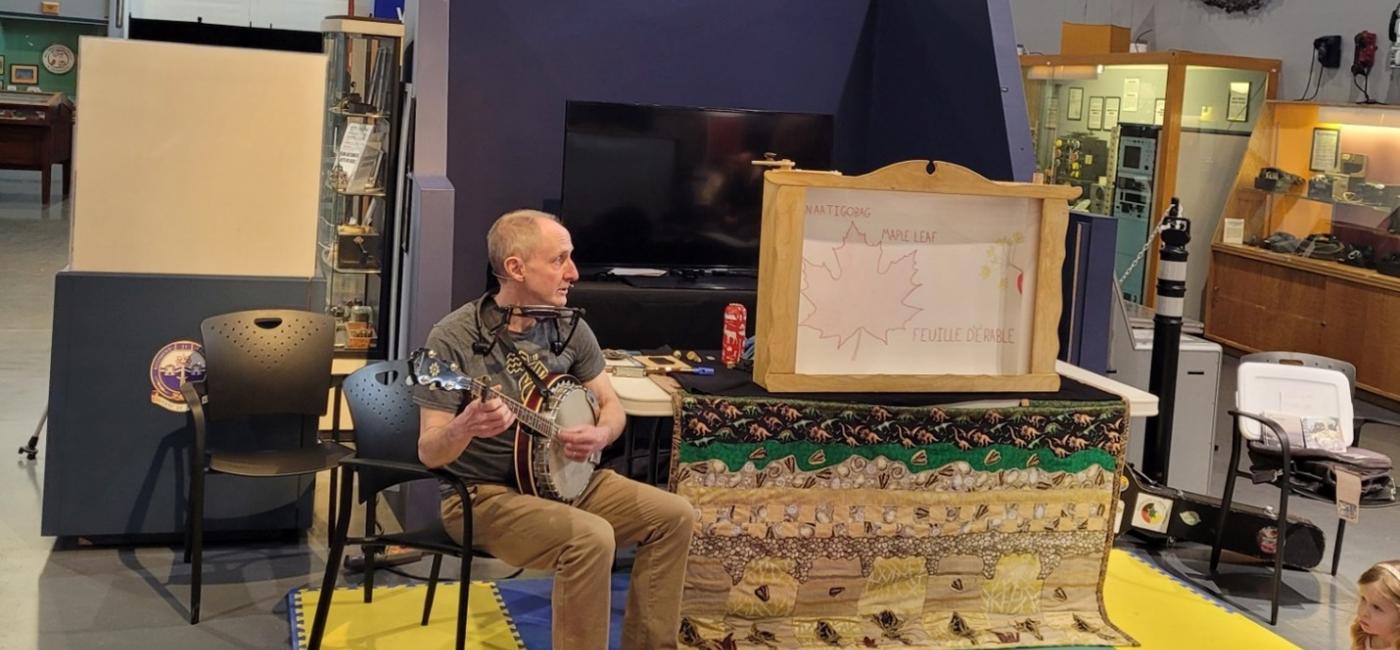
The Military C and E Museum is a host site (not all Kingston museums are open during this period, so they go to a host site to provide a hands-on learning activity). Additionally, the museum will be providing special entertainment on each day to encourage return visitation during the week. Check our social media and website closer to the date to find out what exciting and fun entertainment we have arranged for this year!
Hours: 10am- 4pm Monday 16 March to Friday 20 March
Location: 95 Craftsman Blvd, Kingston , ON K7K 7B4
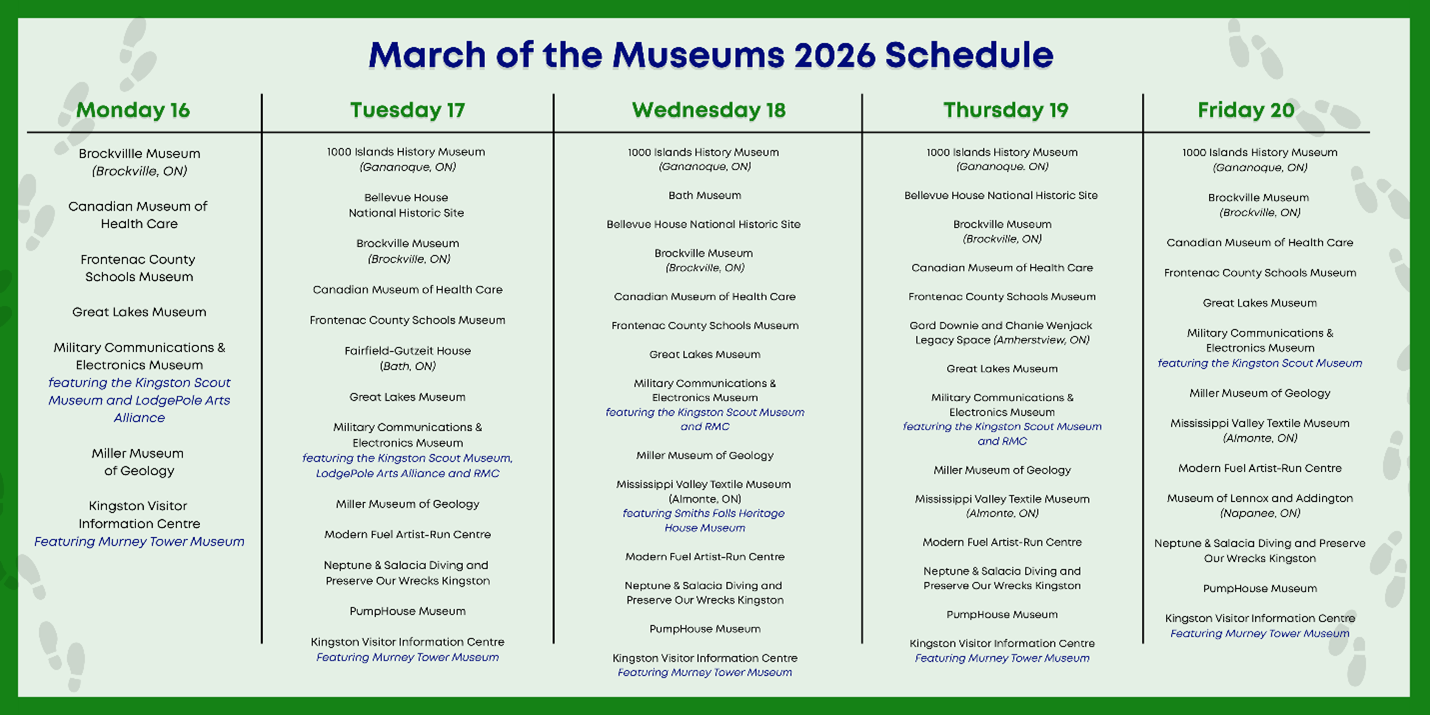
Coffee With Veterans
Mercury Shop News
The Mercury Shop continues to provide premier medal mounting for the serving community. Please note that medals are done on a first-come, first served basis and there is a limit on the number of medals that be completed monthly.
Black History Month
Not Forgotten – Petty Officer, First Class William Neilson Edward Hall, VC
Written By Sean Maas-Stevens
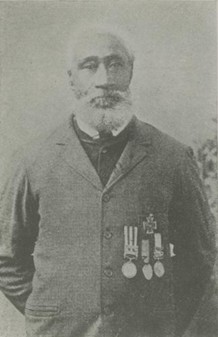
Portrait of William Hall (Credit: Nova Scotia Museum (Ref E)

Ribbons for the Victoria Cross (issued with a blue ribbon for naval personnel at the time), Indian Mutiny Medal, Turkish Crimea Medal, and British Crimea Medal. The ribbons are shown in the order worn by William Hall in his portrait.
William Neilson Edward Hall was born on 28 April 1827 in Nova Scotia to Jacob and Lucinda Hall. William’s father, Jacob Hall, came to Nova Scotia during the War of 1812 aboard a British Frigate. William attended school and later worked in the shipyards of Hantsport. In 1844, at the age of 17 or 18, William began serving aboard a trading ship which sailed out of Half-Way River.
Following his time aboard the trading vessel, William Hall served in the United States Merchant Navy. He chose to leave the US Navy and enlisted with the British Royal Navy in 1852. He spent 4 years aboard the HMS Rodney, which saw service in the Crimean War. For his service as a naval gunner, he was awarded the Turkish Crimea Medal (awarded by the Sultan of the Ottoman Empire to allied nations for service in the Crimean War), and the British Crimea Medal, which bore the Sevastopol and Inkerman clasps.
William Hall continued his service in the Royal Navy and was appointed Captain of the Foretop (the petty officer in charge of the crew manning the foremast) of the HMS Shannon. In 1857, the HMS Shannon was deployed to Calcutta (now Kolkata) in India. At that time, Indian soldiers were rebelling against the British East India Company which had functionally been a ruling power in India on behalf of the British Empire. This conflict, known as the Indian Rebellion (or the Indian War of Independence) had just begun, and the HMS Shannon was sent to Lucknow to support the British garrison stationed there. The gunners of the HMS Shannon were tasked with bombarding the walls of the Shah Najaf Mosque to create a means for the British soldiers to retreat. Under heavy fire the gun crews suffered heavy casualties, such that only William Hall and one officer, Lieutenant James Young, were able to continue firing the ships guns. Their efforts saw the walls of the mosque breached, and the British soldiers were able to escape.
In an announcement dated 1 February 1859, William Hall and James Young were awarded the Victoria Cross for their conduct under fire. The citation read “Lieutenant (now Commander) Young, late Gunnery Officer of Her Majesty’s ship “Shannon,” and William Hall “Captain of the Foretop” of that Vessel, were recommended by the late Captain Peel for the Victoria Cross, for their gallant conduct at a 24-pounder Gun, brought up to the angle of the [Shah Najaf], at Lucknow, on the 16th of November 1857.” With this award, William Hall was the first Black man in the British Empire to receive the Victoria Cross.
Following 24 years of service, William Hall retired from the British Royal Navy on 10 June 1876 as a Petty Officer, First Class (or Quartermaster, depending on the article), and returned to a family farm with two sisters near Hantsport.
William Neilson Edward Hall passed away in 1904 at the age of 77. His funeral saw many family members, friends, neighbours, and veterans in attendance. He was laid to rest in an unmarked burial site.
In the years following the second world war, at the urging of both the Black and veteran communities, William Hall’s remains were reinterred at the Hantsport Baptist Church. A few years later, a cairn was built by the Hantsport Legion to commemorate his service.
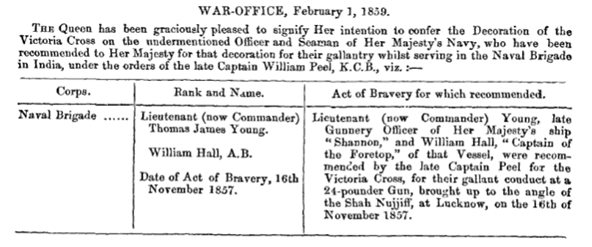
Excerpt from The Gazette showing the citation for William Hall’s Victoria Cross (Ref C)
References: A. https://www.veterans.gc.ca/en/remembrance/people-and-stories/william-neilson-edward-hall
B. https://www.canada.ca/en/navy/corporate/fleet-units/surface/harry-dewolf-class/william-hall/biography.html
C. https://www.thegazette.co.uk/Edinburgh/issue/6881/page/155
D. https://www.moosejawtoday.com/local-news/black-history-month-3453416
E. https://museum.novascotia.ca/blog/what-do-we-remember-when-we-remember-william-hall
F. https://en.wikipedia.org/wiki/Turkish_Crimea_Medal
G. https://en.wikipedia.org/wiki/Indian_Rebellion_of_1857
Trial by Fire : The Royal Canadian Corps of Signals during World War 2
Written by OCdt Louis-Félix Desroches
Since its creation in October 1903, the Canadian Signals Corps has played a vital role in Canada’s military operations. It quickly demonstrated its importance during major events such as the First World War. However, it was during the Second World War that the Corps faced some of their greatest challenges, drawing fundamental lessons for the future of military communications. During its years of service in Europe, the Signals Corps had to repeatedly adapt to new operational environments and the constant evolution of communication technologies, sometimes playing a pioneering role, as was the case during Operation Jubilee on August 19, 1942 (the Dieppe Raid). Although the raid was a military failure, it highlighted the necessity of stable, real-time communication and the critical importance of precise coordination during large-scale operations like amphibious landings. Operation Jubilee is often recognized for the vital lessons it provided, which directly contributed to the success of the Normandy landings in June 1944. To fully understand this evolution, it is first necessary to examine the role of the Canadian Signals Corps during the Dieppe Raid to assess its influence on Operation Overlord on June 6, 1944.
The Royal Canadian Corps of Signals and Operation Jubilee
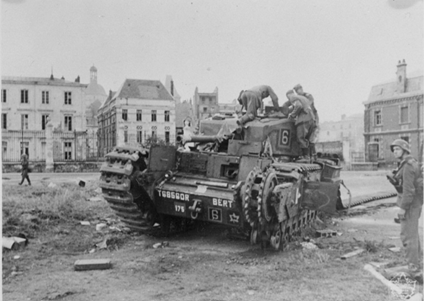
The Dieppe Raid, launched on August 19, 1942, was an Allied attempt to test the feasibility of a landing in occupied Europe following the evacuation of Dunkirk. Although about 6,100 soldiers took part, Operation Jubilee was largely Canadian in nature: nearly 5,000 troops came from the 2nd Canadian Infantry Division. The operation had multiple objectives: to test German defenses, gather intelligence, trial amphibious landing tactics, and evaluate inter-service coordination. The Signals Corps played a key role in the planning phase, with detachments from the 2nd Canadian Infantry Division Signals (2 Div Sigs) and the 1st Canadian Army Tank Brigade Signals (1 CATB Sigs), totaling around 60 signallers. Communication planning was meticulous: the system included floating command posts (HMS Calpe and HMS Fernie), approximately 75 wireless sets — WS No. 18 (portable), WS No. 19 (vehicle-mounted), and WS No. 46 (designed for beach landings) as well as the planned setup of three land-based transmission stations, each supported by three signallers. Three reconnaissance vehicles equipped with WS No. 19 radios were intended to maintain liaison with headquarters, particularly to coordinate a retreat if necessary. Forward observation officers also had dedicated radio links with the destroyers for naval fire support. The system aimed for total redundancy, with the ambition of ensuring complete, continuous, and real-time communication coverage across units. However, the reality of combat quickly rendered much of this plan ineffective: seawater damaged most radios, interference and technical limitations reduced their range, and only about twenty remainedoperational. The long antennas on some sets made signallers visible and vulnerable to German fire. Additionally, the frequency incompatibility between WS No. 46 and the command HQ's WS No. 19 caused delays and information loss. Poor coordination between British armor and Canadian signals elements also resulted in the destruction of radio vehicles still attached to tanks during the landing. Finally, the rigidity of communication procedures led to a disconnect between actual events on the ground and the command’s situational awareness. In short, despite its detailed technical planning, Operation Jubilee exposed the fragility and weakness of communications systems under enemy fire. Nevertheless, iflexiblet provided crucial lessons: the need for more robust, adaptable, and improvisable communications, as well as better inter-service integration. These insights would directly shape the communication strategies employed by the Signals Corps during the Normandy landings in 1944.
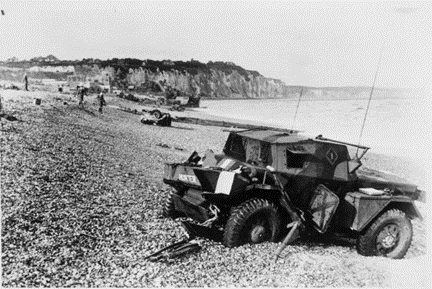
The Evolution of Communications and D-Day
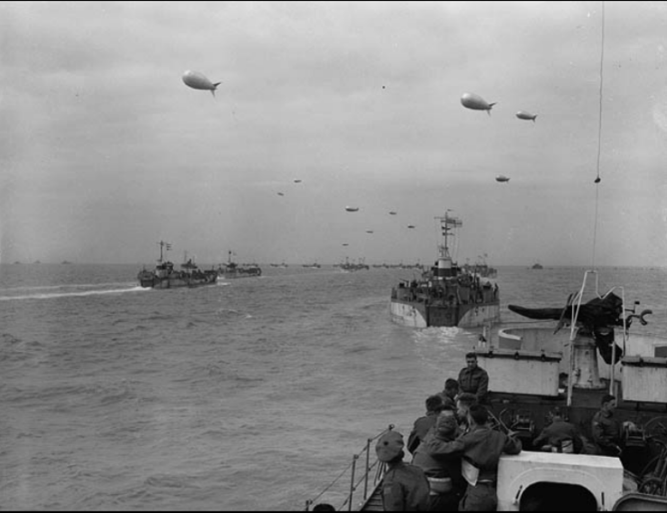
The events of the Dieppe Raid had a significant impact on the planning and execution of Operation Overlord, the Allied landing in Normandy on June 6, 1944. It is important to note, however, that the strategic context had greatly evolved between August 1942 and June 1944. First, the Allies had secured air superiority over the region, allowing aircraft to operate virtually unchallenged above the landing beaches. A vast deception campaign, known as Operation Fortitude, was also implemented. This included the creation of a phantom army in southeast England, made up of inflatable tanks, decoys, and fake headquarters, supported by false radio transmissions suggesting an attack on the Pas-de-Calais. Aircraft from RAF No. 100 Group dropped chaff (strips of metal foil) to simulate a false invasion on German radar. These efforts successfully deceived the German high command, which kept divisions stationed away from Normandy. Unlike at Dieppe, communications were taken very seriously in 1944. The importance of transmission systems was recognized from the earliest planning stages, allowing full integration of communications into the operational structure. Stronger joint coordination and increased standardization of procedures, codes, and radio frequencies were implemented to avoid the tactical confusion experienced in 1942. Thousands of additional signallers were trained in the months leading up to the invasion, and newunits specializing in amphibious communication operations were formed. Radios were also improved to be more water-resistant and battlefield durable. A redundancy strategy was adopted, combining wireless radios, landlines, visual signals, and motorcycle couriers to ensure continuous communication regardless of equipment failures. Additionally, undersea cables were pre-installed to establish stable links between England and the continent from the earliest stages. A unified communications doctrine enabled synchronization between land, sea, and air forces, facilitating precise coordination of naval gunfire, preliminary bombardments, and troop movements. On Juno Beach, the 3rd Canadian Infantry Division was supported by approximately 375 signallers from the Royal Canadian Corps of Signals, tasked with establishing and maintaining communication networks. They set up eight separate communication networks to ensure coordination with neighboring British forces and quickly laid field telephone lines once a beachhead was secured. Motorcyclists also played a key role in delivering messages when radio or cable lines were down. However, a significant portion of Canadian signals units only arrived in France in the days following D-Day, once the beachhead was stabilized. Ultimately, the painful lessons learned at Dieppe had a direct and powerful influence on the planning of Overlord’s communications strategy, helping to reduce casualties, improve operational responsiveness, and ensure effective coordination between Allied components, a critical factor in the success of the Normandy landings.